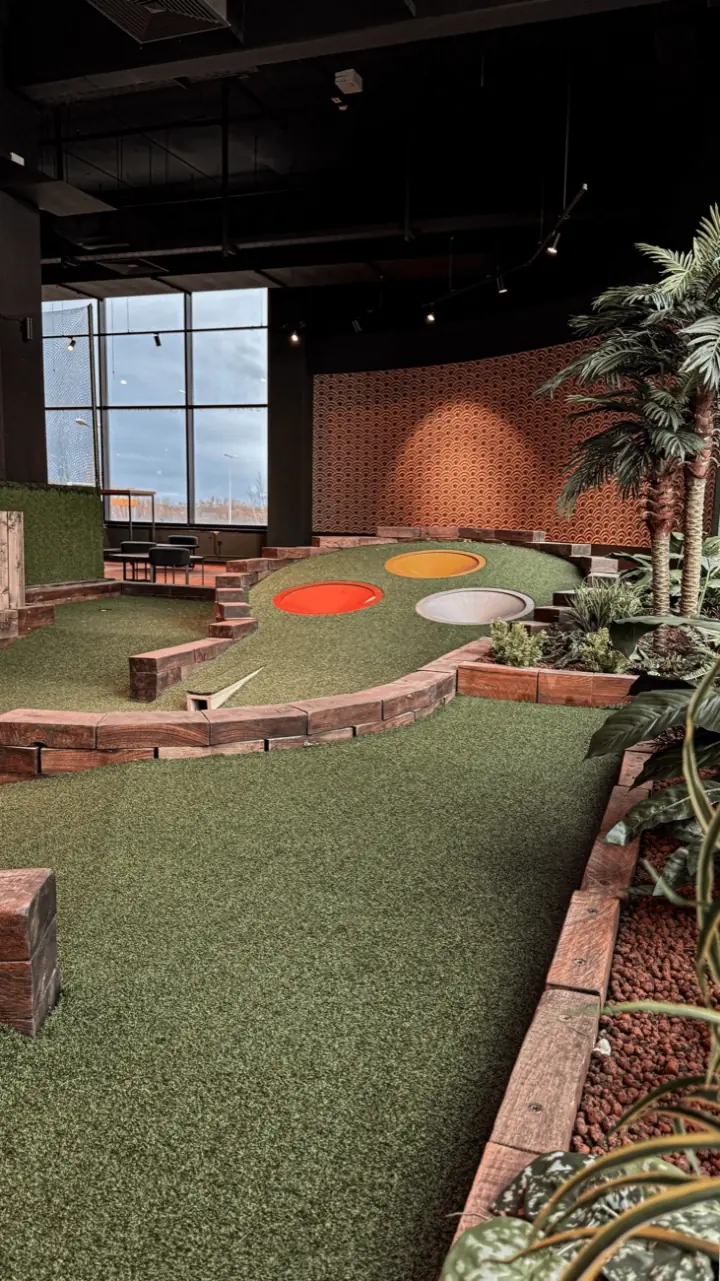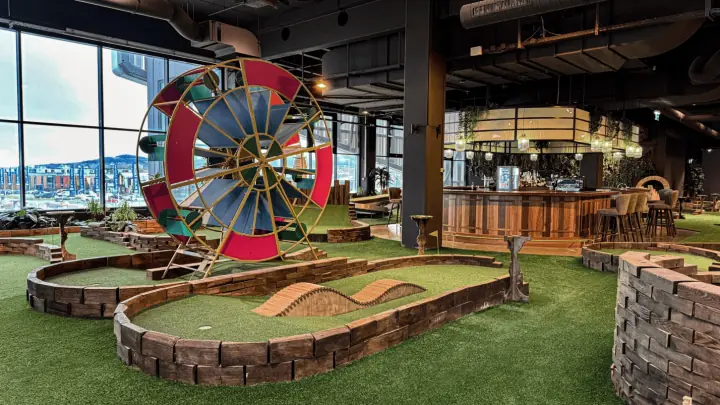
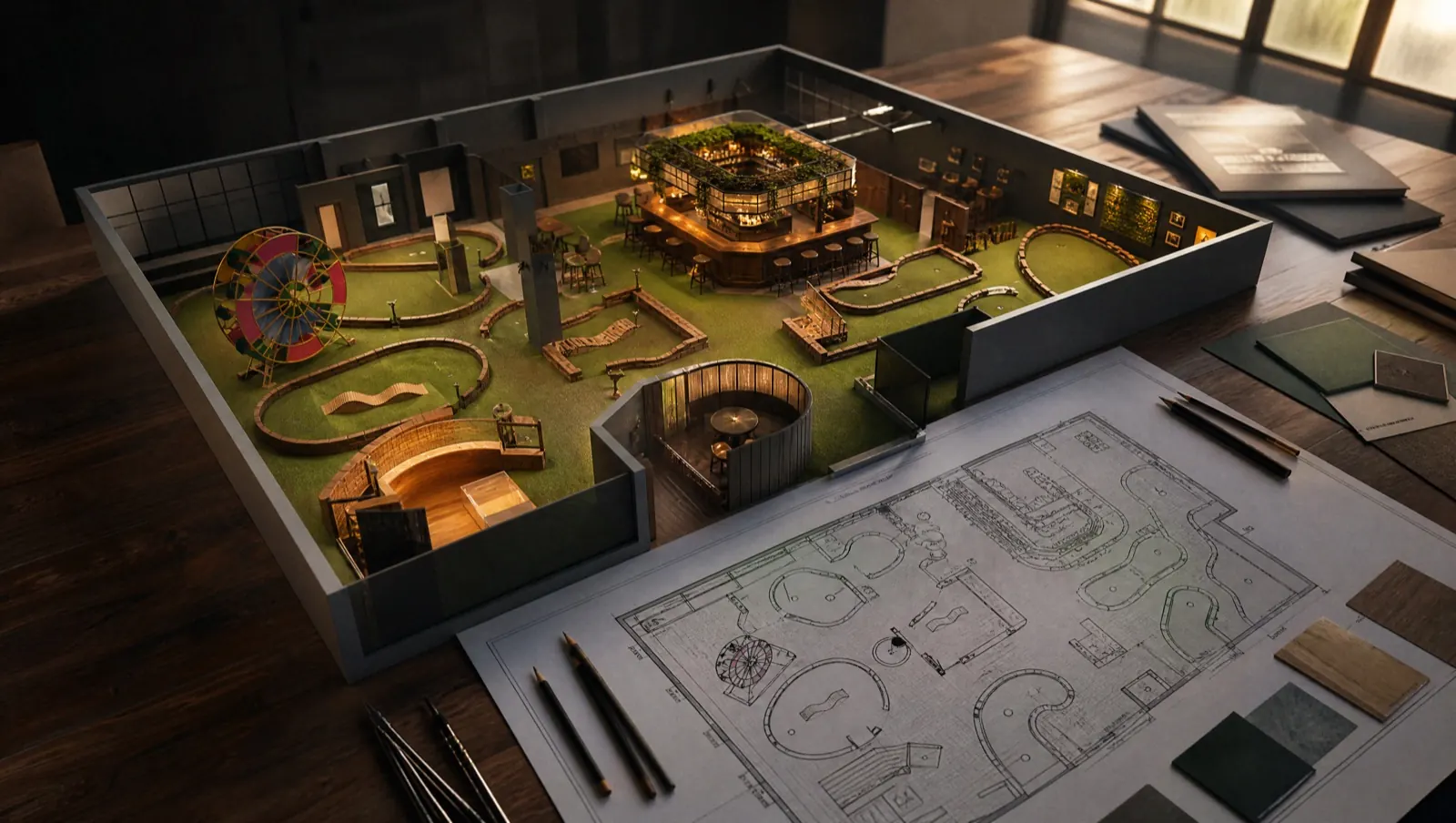
Most mini golf venues that struggle did not fail at opening. They failed on a spreadsheet months earlier, when someone guessed the rent, guessed the footfall and hoped the bar would cover the gap. Planning is where the margin is won.
We design, build and operate venues, so we sit on both sides of this. We have run the till on a slow Tuesday and we have watched a queue form for the Ferris-wheel hole at DSTRCT. The venues that work share the same thing: the boring questions got answered honestly, early.
This is the framework we use before we recommend anyone spend real money.
01Start with the catchment, not the floor plan
It is tempting to fall in love with a space first. Resist that. The single biggest driver of revenue is how many people live and move within easy reach, and how little competition sits between them and you.
Before we look at a single drawing, we want to know:
- Population within 20 minutes. Indoor leisure depends on a local crowd that comes back. Tourists passing through once won't carry it.
- What anchors the footfall. A cinema, a bowling alley, a food court or a busy retail floor does the marketing for you. A standalone unit on a quiet street does not.
- Who else is competing for a night out. That means karting, escape rooms and late-night dining as well as other mini golf, because what you're selling is the evening.
Rule of thumb
If a site needs a marketing miracle to bring people past the door, no layout will save it. Pick the location that already has the crowd, then earn the visit.
02Size the space around revenue per square metre
More floor is not more profit. Every square metre carries rent, heating and cleaning whether a ball rolls over it or not. The goal is to fit the right number of holes plus the parts of the venue that actually take money.
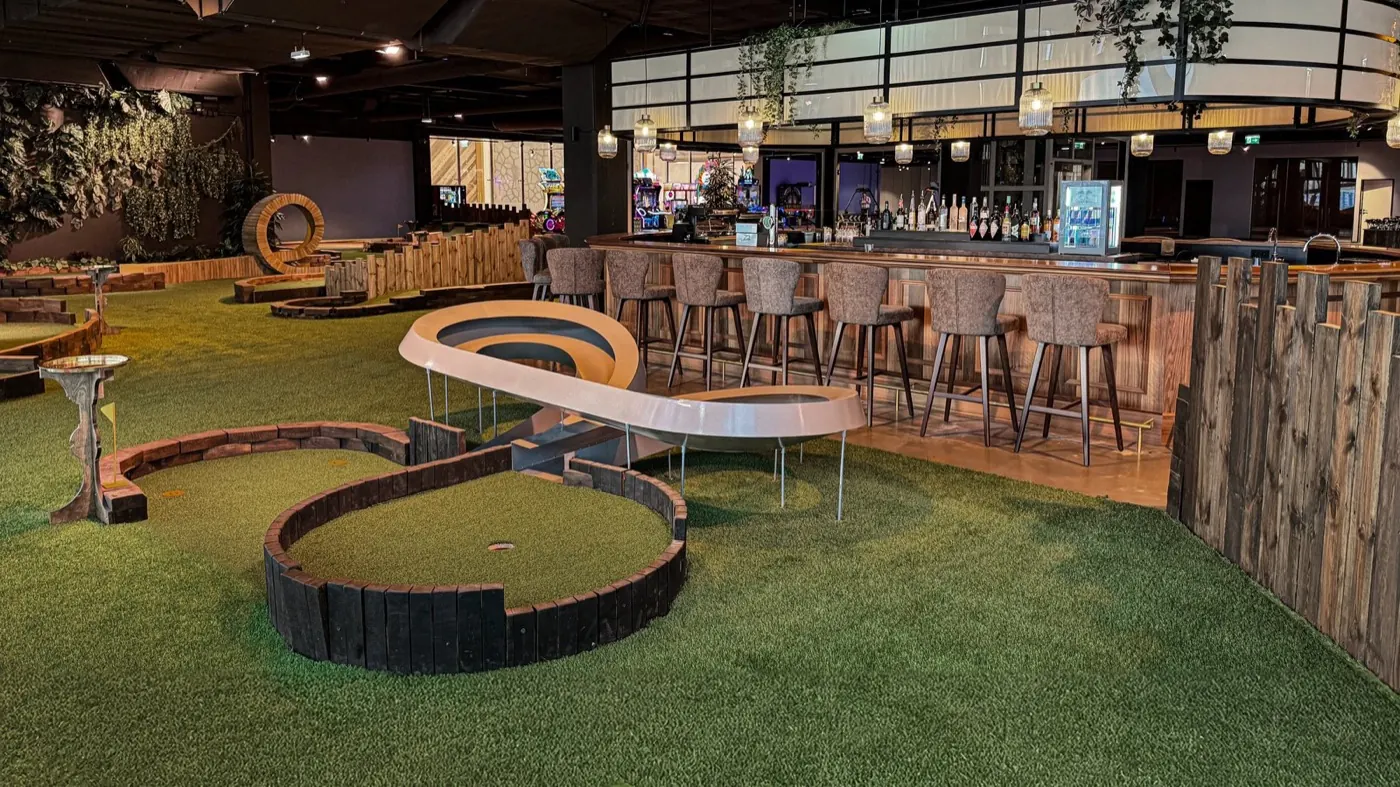
An 18-hole indoor course usually wants somewhere between 400 and 700 m², depending on theme density and how much you build vertically. The holes are only part of it. The room that pays the rent is almost always the one with a bar in it.
The mini golf gets people through the door. The bar, the food and the second round are what make the night profitable. What we tell every partner on day one
So we plan the journey deliberately: arrival and tickets, the course itself, then a social space people want to stay in once the round is over. A venue that empties the second the eighteenth hole is putted is leaving most of its money on the table.
03Build the model before you build the venue
This is the part people skip, and it matters most. You only need a handful of numbers, but they have to be realistic.
- Capacity. How many players can the course hold per hour without it feeling like a traffic jam?
- Average spend. Ticket plus what they spend at the bar. This is the number most people guess too high.
- Utilisation. Be brutal. Weekday afternoons are quiet everywhere. Plan for the average week, not the Saturday peak.
Put those together and you get a believable annual revenue. Set it against rent, payroll, cost of goods and your build cost, and you can see the payback period before you sign anything. If the maths only works when every assumption is best-case, that is your answer.
04Design for photos, repeat visits and throughput
Once the numbers hold, design has to pull people in, bring them back and keep the course moving so you can sell more rounds.
We spend a lot of time on a few signature holes per venue, the ones people film and post, because that reach is free. We balance that against flow. A hole that is fun to watch but creates a bottleneck costs you capacity every single hour you are open.
The detail most people miss
Lighting and sound do more for the experience than another themed prop. A space that feels like a night out justifies a night-out price.
05Decide what you build, buy and outsource
Finally, be honest about what you are good at. Designing a course, fabricating it to last commercial traffic, fitting it on site and then running it day to day are four different skills. Most operators are brilliant at one or two of them.
We can take a venue from a blank floor to opening night, or slot into the part you do not want to own. Either way, the planning above is the same, and it is where we always start.